Support Subdomains as an AEO Growth Machine
Your support subdomain isn't just for tickets, it's an AEO citation magnet. Learn how to structure, schema-mark, and optimize help centre content so AI engines cite you first.
SEO
Jul 16, 2026
11 min readBy Chandu Thomas
Most companies treat their support subdomain as a customer service utility - a place to deflect tickets and resolve complaints. This article reframes that entirely.
Your help centre (help.yoursite.com or support.yoursite.com) is sitting on a goldmine of question-and-answer content written in exactly the conversational language that AI answer engines are built to extract. And if you're not optimising it, someone else will get the citation.
What Is Answer Engine Optimisation (AEO)?
When someone types a question into ChatGPT, Perplexity, or Google in 2026, they don't get ten blue links. They get a direct answer. One source gets cited. One brand gets the mention.
Answer Engine Optimisation (AEO) is the practice of structuring your content so AI-powered platforms can easily understand, trust, and cite it as a direct answer to a user's query. Unlike traditional SEO - which chases rankings and clicks - AEO measures success through citations and brand mentions inside AI-generated responses.
The numbers make the shift hard to ignore:
- ChatGPT serves over 900 million weekly active users
- Perplexity processes more than 100 million queries weekly
- AI-referred web sessions jumped 527% year-over-year in early 2025
- Gartner predicts traditional search volume will drop 25% by 2026
Traditional SEO still matters - AI engines mostly retrieve content that's already indexed and ranking. But ranking in position one no longer guarantees visibility in AI-generated answers. The content evaluation criteria have diverged. AEO requires answer-first structure, explicit Q&A formatting, schema markup, and AI-crawler accessibility. Most support subdomains are already halfway there without realising it.
What Is a Support Subdomain - and Why Does It Matter for AEO?
A support subdomain is the dedicated help property your company already runs - typically help.yoursite.com or support.yoursite.com - hosting FAQs, how-to guides, troubleshooting articles, product documentation, and onboarding walkthroughs.
Here's the thing: every one of those content types is written in the direct question-and-answer format that AI engines are trained to extract. Your marketing site is written to convince. Your help centre is written to answer. AEO rewards the latter.
Consider what lives on a support subdomain:
- FAQs with explicit Q&A pairs
- Step-by-step procedural guides
- Error code explanations with specific, verifiable answers
- Integration guides covering exact product capabilities
- Glossary and definition pages for industry terminology
Those are among the highest-citation content formats in AI-generated responses. You already own them. You just haven't optimised them yet.
Why Support Subdomains Are a Natural AEO Fit
Most marketing content is written to persuade. Support content is written to answer. That single distinction is why help centres are structurally better positioned for AEO than almost any other content type on your site.
A well-written support article already does what AEO demands: the title is a question, the opening paragraph answers it directly, the body follows with numbered steps, and related questions appear at the bottom. That's the exact extraction pattern AI engines are designed to recognise.
The competitive moat: Your support subdomain is the one piece of content real estate a competitor can never outrank you on. Only you can document how your own product works. AEO turns that exclusivity into citations.
Subdomain vs Subfolder - Which Is Better for AEO?
The classic SEO debate takes on a new dimension here. Subfolders (yoursite.com/help/) are traditionally favoured for passing link equity. But a dedicated subdomain (help.yoursite.com) gives AI engines a cleaner entity signal - a distinct, topically-contained resource that can carry its own schema, its own llms.txt, and its own GSC property.
If you already have a support subdomain: optimise it where it stands. The AEO opportunity outweighs any migration benefit. If you're building from scratch: either structure works, but plan for a dedicated GSC property and llms.txt regardless.
How to Structure Support Content for AEO
The most impactful AEO change you can make costs nothing. It's a structural rewrite of how your articles open.
- Question-first titles: "How Do I Reset My Password Without Access to My Email?" not "Password Reset Instructions"
- 40–60 word direct answer in the opening paragraph: Give the complete answer before any context or caveats - AI engines extract this as the citation snippet
- Atomic paragraphs: Each paragraph should answer one thing and work standalone - AI engines extract passages without surrounding context
- Numbered steps for procedural content: Verb-led, one action per step
- Explicit FAQ section at the end of every article: This is the single highest-leverage AEO addition you can make to existing content
- Author and last-updated date visible on every article: AI engines factor freshness and authorship into citation decisions
Real Brand Example: A Smart Traffic SaaS Company
A B2B traffic intelligence company in the smart traffic industry maintains a structured help centre covering hardware installation, platform configuration, and technical troubleshooting across their product lines.
A user asking Perplexity "How do I configure [Platform] for a new intersection?" is far more likely to receive an answer citing the help subdomain than the main marketing site. The help subdomain contains the direct, procedural answer. No marketing page competes with documentation that actually answers the question.
This is the pattern across B2B SaaS and technology companies: branded how-to and configuration queries are being answered by AI engines using help centre content, not product pages.
Schema Markup - Beyond Basic FAQ Schema
Schema markup is the most underutilised AEO lever on support subdomains. Research shows FAQ and Q&A schema appears on only 10.5% of AI-cited pages - despite being exactly what answer engines look for. The core schema types to deploy:
- FAQ Page: On any article containing Q&A pairs - high impact, directly maps to AI extraction format
- HowTo: On procedural step-by-step guides - aligns with how-to query patterns
- TechArticle: On technical documentation - establishes domain authority signals
- SpeakableSpecification: Marks content as suitable for voice output and AI assistants
- Article with dateModified: Always surface your last-updated date in schema - freshness is a ranking signal for AI engines
Most teams start with FAQPage and HowTo and see immediate gains. The deeper wins come from layering in author entity schema (linking authors to Person schema with credentials) and BreadcrumbList schema to help AI engines understand your content hierarchy.
What Is llms.txt and Why Your Support Subdomain Needs One
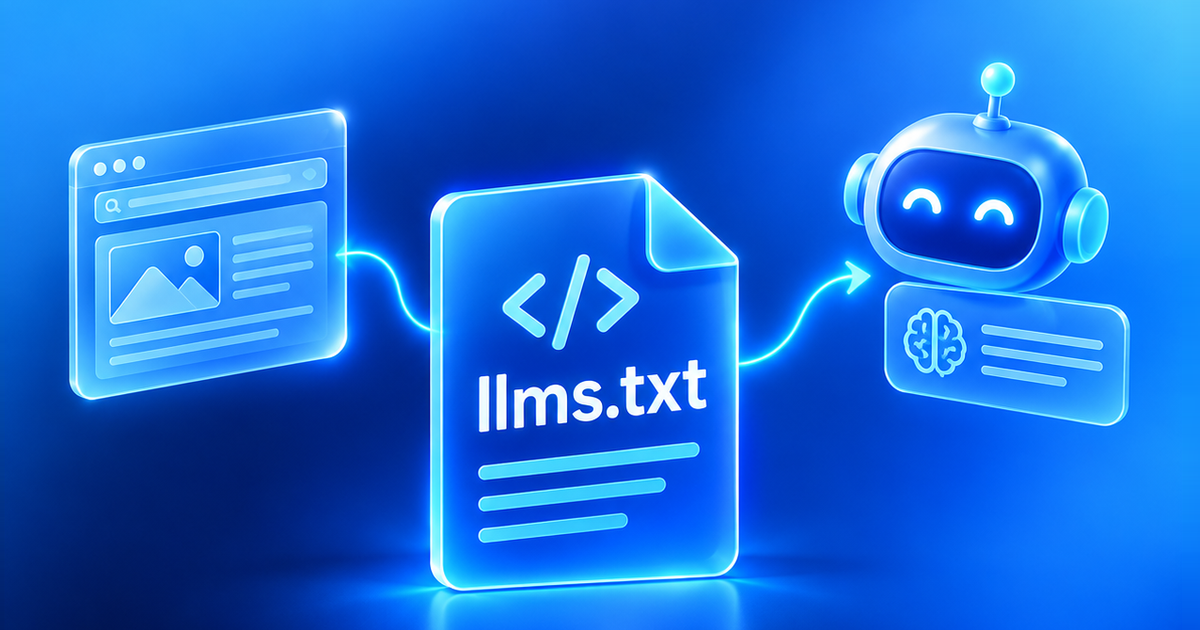
llms.txt is an emerging standard - a plain-text file placed at your subdomain root - that tells AI crawlers which pages are most important, what your site covers, and how to prioritise your content during retrieval. Think of it as robots.txt for AI language models.
As of early 2026, Perplexity and several emerging AI search engines actively reference it. Implementing it costs nothing and takes under an hour. Place it at help.yoursite.com/llms.txt, list your key sections and most important article URLs in Markdown format, and include a brief description of what your help centre covers and who it's for.
While you're there, check your robots.txt allows the major AI crawlers: GPTBot (ChatGPT), PerplexityBot, ClaudeBot, Google-Extended, and OAI-SearchBot. Blocking any of these is silently removing yourself from AI citation consideration.
What Support Content Topics AI Engines Actually Pick Up
Not all support content gets cited equally. The highest-citation formats are definition articles ("What is X?"), how-to guides, error code explanations, integration guides, and comparison articles ("X vs Y"). These map directly to query patterns AI engines handle at volume.
The lowest-citation content: PDF-only documentation, video tutorials without transcripts, and login-gated articles that AI crawlers can't access. If your most valuable support content is behind any of these barriers, it's effectively invisible to AI engines.
How to Audit Your Support Subdomain for AEO Readiness
Before creating new content, audit what you have. Most support subdomains are sitting on partially-optimised AEO assets that need structural adjustment, not replacement.
The five audit areas to cover: content structure (question-led titles, direct opening answers, FAQ sections), schema markup coverage, crawlability and AI bot access, entity and authority signals (author attribution, last-updated dates, internal linking), and topic coverage against actual query volume.
To assess topic coverage: pull your top 50 support ticket topics, run each as a query in ChatGPT and Perplexity, and note whether your subdomain gets cited, a competitor does, or no source is available. That gap analysis is your content calendar.
Quick Wins vs Long-Term AEO Strategy
Quick wins - implement in the next two weeks
- Add a FAQ section to your top 20 articles
- Rewrite opening paragraphs to deliver a direct answer in under 60 words
- Deploy FAQPage schema on all Q&A content
- Update robots.txt to allow all major AI crawlers
- Create and deploy llms.txt on your help subdomain
- Add dateModified to all article schema
- Set up a separate GSC property for the subdomain
Long-term - months 3 to 12
- Build a glossary and entity hub for your core product terminology
- Establish author entity schema and link authors to professional profiles
- Develop a gap-closing content calendar from your query analysis
- Build topical clusters linking related support articles
- Create a quarterly AI citation monitoring cadence
- Integrate AEO citation metrics into your monthly content reporting
What This Is Actually Worth
AEO visibility on your support subdomain has three direct revenue impacts: support cost deflection (every AI citation that answers a ticket saves $8–25 in support contact cost), pipeline influence (B2B buyers research in AI engines before engaging sales - a help centre citation shapes consideration even with no click), and higher conversion on AI-referred sessions, which research shows convert at 2x the rate of traditional organic traffic.
The brands that move now will own the citation slots. The ones that wait will be optimising to displace incumbents.
Conclusion
Your support subdomain isn't a cost centre to tolerate - it's an AEO asset you already own and nobody else can replicate. Every FAQ, troubleshooting guide, and how-to article sitting on help.yoursite.com was written in the exact answer-first format that ChatGPT, Perplexity, and Google's AI Overviews are built to extract and cite.
The teams that win the citation race over the next 12 months won't be the ones publishing the most new content. They'll be the ones who audited what they already have, fixed the structural gaps (question-led titles, direct opening answers, FAQ schema, llms.txt), and treated their help centre as a growth channel instead of a support cost.
Start with the quick wins. Add FAQ sections to your top 20 articles. Rewrite your opening paragraphs. Deploy schema. Ship llms.txt. None of it requires a new headcount or a content overhaul, it requires treating documentation you already publish as the AEO asset it already is.
If you're not sure where your support subdomain stands today, or want a full AEO audit across your content, schema, and crawlability, Search Ally Agency can help you find the gaps and build the roadmap to close them.
Related Services
Content Marketing
Paid Media Services
Content Marketing
Web Development Services
Content Marketing