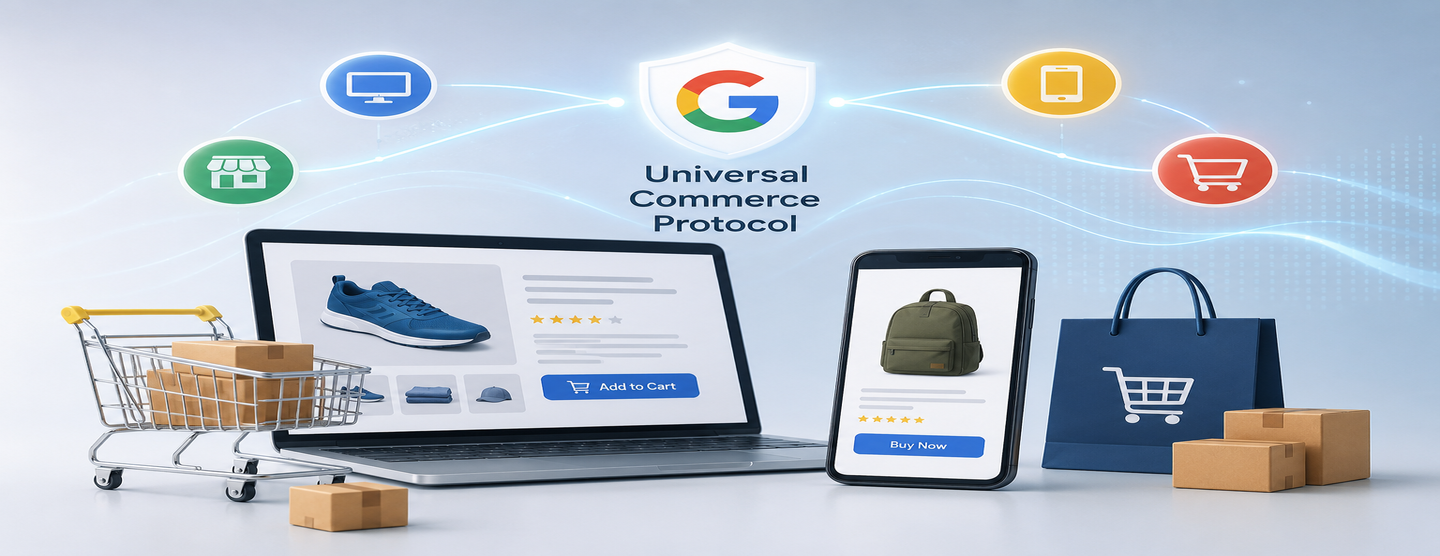
Google’s UCP: What It Means for Ecommerce
Google's Universal Commerce Protocol is changing how products get discovered and bought, learn what it means for your ecommerce clients and how to prepare
Digital Marketing
Aug 3, 2026
8 min readBy Chandu Thomas
Your Client's Product Just Got Bought ,Without Anyone Visiting Their Website
Picture this: a shopper opens Gemini, asks for "wireless headphones under $150 with good noise cancellation," and within seconds the AI has searched inventory, checked pricing, and completed a purchase using saved payment details. No product page. No cart. No visit to your client's site at all.
This isn't a hypothetical. It's the shopping experience Google is actively building with the Google Universal Commerce Protocol, and it's already live for early-access retailers. For agencies managing ecommerce clients, this is one of the biggest infrastructure shifts to hit the space since Shopping Ads first launched ,and it's moving fast.
What Is UCP?
The Universal Commerce Protocol (UCP) is an open-source standard, built by Google, that lets AI agents talk directly to a retailer's systems to search products, build a cart, check out, and manage what happens after the sale ,all without a human clicking through a traditional website.
Think of it as a common language. Instead of every AI shopping assistant needing a custom, one-off integration with every retailer, UCP gives everyone the same set of rules: how to look up a product, how to check inventory, how to build a cart, how to pay, and how to handle returns or order tracking afterward.
Google didn't build this alone. UCP was co-developed with Shopify, Etsy, Wayfair, Target, and Walmart, and it's already endorsed by more than 20 major players across retail and payments, including Stripe, Mastercard, Visa, American Express, Best Buy, The Home Depot, and Zalando. That kind of backing signals this isn't a side experiment ,it's infrastructure Google expects the industry to standardize around.
UCP is also built to work alongside other emerging agent standards, including Anthropic's Model Context Protocol (MCP), Google's own Agent2Agent (A2A) protocol, and the Agent Payments Protocol (AP2), which handles secure, verifiable payment authorization for agentic transactions.
Importantly, retailers stay the seller of record under UCP. They keep ownership of the customer relationship and their data ,Google isn't inserting itself as the merchant.
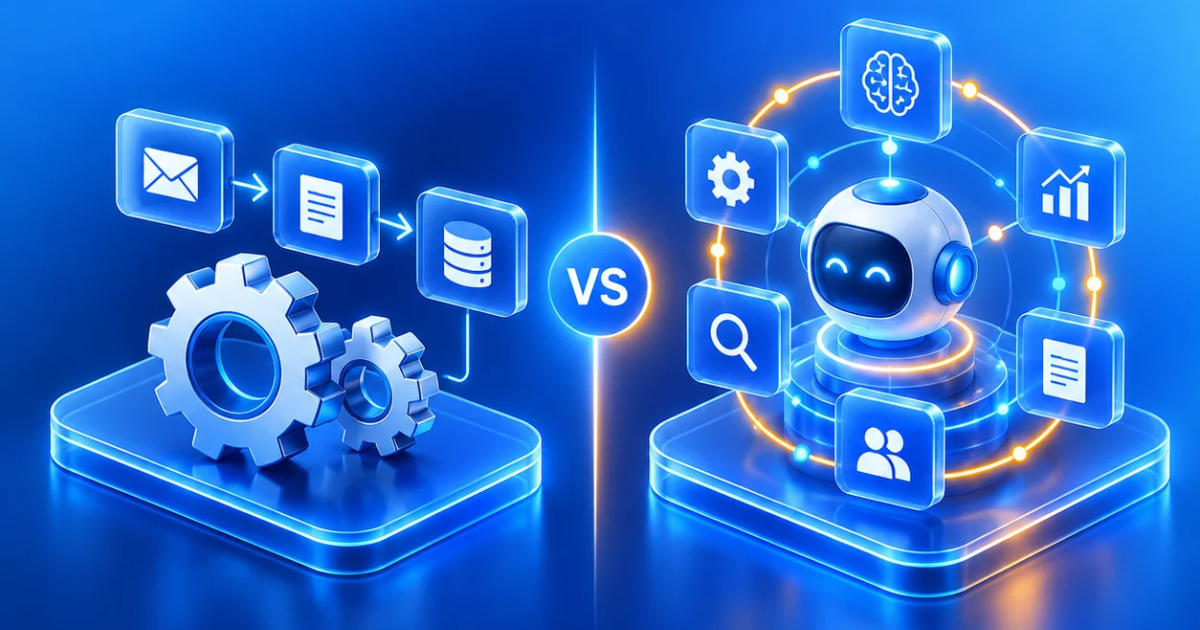
How Product Data Used to Flow vs. How It Flows Now
Before (traditional search): Shopper searches Google → sees product listings from Merchant Center feeds → clicks through to the retailer's website → browses, adds to cart, checks out on the retailer's own site.
Now (AI Mode / Gemini agentic checkout): Shopper asks Gemini or Google AI Mode a question → the AI agent queries the retailer's systems directly via UCP → the agent compares options, applies discounts, and can complete checkout using Google Pay or PayPal, with saved shipping and payment info → the transaction closes inside the AI conversation, with the retailer remaining the seller of record on the back end.
The retailer's product feed ,specifically the Merchant Center feed ,is no longer just a listings source. It's becoming the primary interface an AI agent uses to evaluate and recommend a product. If that feed is thin, outdated, or missing key attributes, the AI simply won't surface the product, no matter how good it actually is.
The 3 Core Shifts for Ecommerce Brands
1. Discovery Products are increasingly found through conversational, intent-based queries rather than keyword search. An AI agent decides what to surface based on structured data quality, not just SEO or ad spend.
2. Checkout Purchases can now complete without a website visit. UCP supports direct, in-AI checkout on eligible U.S. retailers today, with Google Pay and PayPal as supported payment rails, and global expansion planned.
3. Post-Purchase UCP is designed to extend into loyalty rewards, order management, and related-product discovery ,meaning the agentic relationship doesn't end at checkout. Brands that link loyalty and identity data into UCP stand to keep more of the customer relationship even when the AI mediates the transaction.
All three are shifting at once, which is why this isn't a "watch and wait" situation for agencies.
What Happens If Your Clients Ignore It
The risk isn't abstract, it's structural:
- Invisibility in AI surfaces. If a product feed isn't UCP-ready, the product may simply never appear in AI Mode or Gemini shopping results, regardless of ad spend or organic ranking.
- Loss of high-intent traffic. Shoppers using conversational commerce tend to be closer to a purchase decision. Missing this channel means missing some of the most valuable traffic available.
- Margin risk from "lazy AI" buying. When an agent optimizes for the fastest, cheapest match to a query, brands without differentiated, well-structured data risk being commoditized ,competing purely on price rather than brand value.
The brands treating their Merchant Center feed as a static, "set it and forget it" file are the ones most exposed here.
What Agencies Need to Do Right Now
- Audit the Merchant Center feed. Check for completeness, accuracy, and freshness ,this is now functioning as a live landing page, not a background data file.
- Add UCP-ready data attributes. Ensure product data includes the structured details agents rely on to compare and recommend products (pricing, availability, variants, and detailed specs).
- Join Google's early access / merchant interest program. UCP checkout is currently rolling out to eligible U.S. retailers, so getting on the list early matters.
- Enrich feeds beyond the basics. Thin listings won't compete. Detailed, differentiated product data helps agents choose your client's product over a cheaper, less-informative competitor.
- Connect loyalty and identity data. UCP is expanding to support loyalty rewards and identity linking ,brands that plug this in early can preserve customer relationships even in agent-mediated purchases.
- Monitor AP2, A2A, and MCP compatibility. Since UCP is designed to interoperate with these broader agent standards, understanding how they connect will matter as the ecosystem matures.
The Opportunity: Why This Is Actually Good News
Every major shift in commerce infrastructure has created a window for agencies who move early to become indispensable. Mobile commerce in 2010 rewarded the brands ,and the agencies ,that got ready before it became mandatory. UCP is shaping up the same way.
Agencies that build UCP readiness into their service offering now ,feed audits, attribute enrichment, agentic commerce strategy ,have a real opportunity to own this category for their clients before it becomes table stakes. This is a chance to lead a conversation most competitors haven't started having yet.
Ready to Get Your Clients UCP-Ready?
Agentic commerce is moving from early access to industry standard faster than most brands are prepared for. The agencies that act now ,auditing feeds, enriching data, and getting clients into Google's early access program ,are the ones who'll own this space when it goes mainstream.
Book a UCP Readiness Audit for your brand with Search Ally Agency and make sure your products are ready to be discovered, recommended, and purchased in the age of AI-driven shopping.
Related Services
Content Marketing
Paid Media Services
Content Marketing
Web Development Services
Content Marketing